Project Brief
timeline
6 weeks
ROLE
UI/UX Designer, Design Lead
TEAM
3 Designers + 4 Developers
tools
Figma, Canva, Adobe Illustrator, Relume AI
Overview
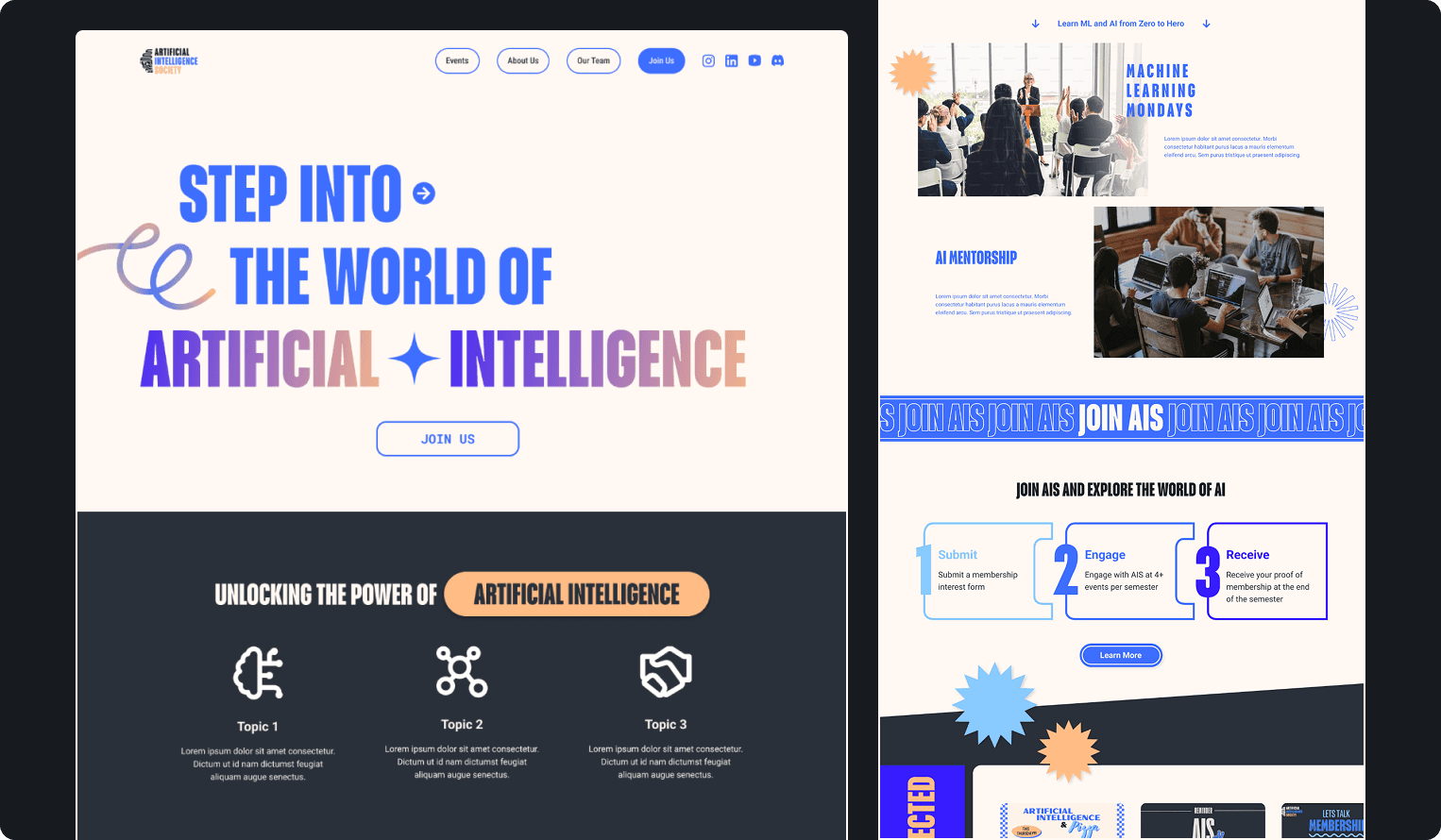
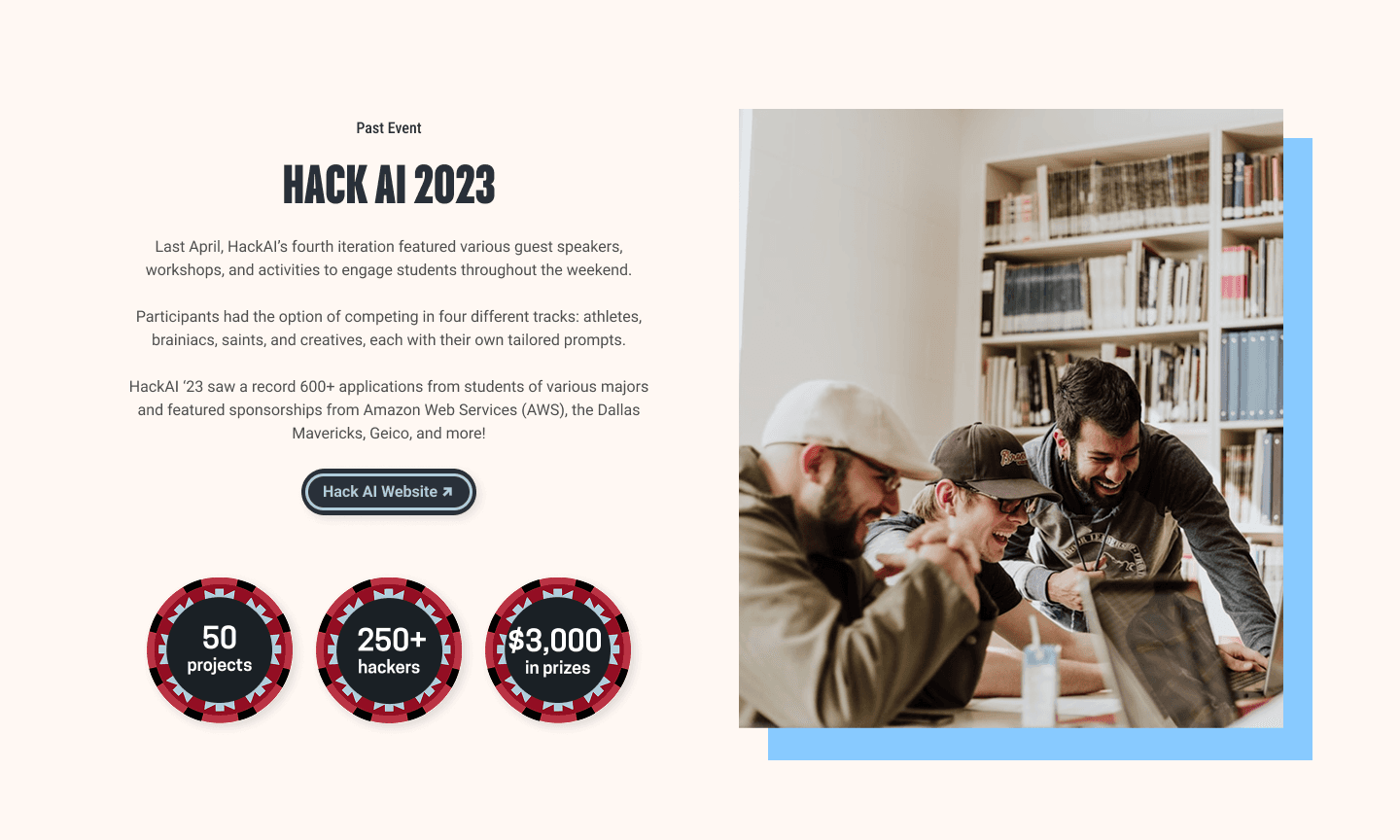
The Artificial Intelligence Society at UT Dallas had strong student interest, but its cluttered website buried events, programs, and membership paths. I led the redesign to clarify the information architecture, strengthen AIS’s visual identity, and guide visitors toward joining or attending events.
Impact at a Glance
⚙️ Project Constraints
The redesign had to work within the existing tech stack while aligning with a new logo, color palette, and developer handoff process.
Research & Insights
Understanding the Problem
To understand why interest was not converting into engagement, we interviewed 20 participants, including 18 students and 2 stakeholders. The research revealed two main user groups: new visitors who needed to understand AIS before committing, and returning users who wanted quick access to event details.
What Users Told Us

New Users
I want to know what this organization actually does before I commit to anything.
Returning Users
I just need to quickly check if that workshop is still happening this week.
Research Synthesis
Key Insights
1
Users could not find what they needed
70% found navigation only “somewhat easy” to use. Students struggled to find event sign-ups, while stakeholders had trouble locating contact information.
2
Event content was outdated and hard to scan
75% complained about outdated event information. Dense text and disorganized event cards made it difficult to quickly understand upcoming opportunities.
3
The design lacked energy and clarity
Only 50% found the design “somewhat appealing.” Generic visuals and weak CTAs made AIS feel less active and less inviting than it actually was.
User Persona
Meet Sarah
We synthesized the findings into Sarah, a motivated student looking for hands-on AI opportunities but overwhelmed by unclear navigation and outdated event information.

Competitive Analysis
Looking Outward
We benchmarked high-performing student org sites and saw consistent patterns that successful clubs implement to engage and convert visitors:
✨
Strong Brand Identity
Cohesive visual design that reflects the organization's energy and values
🎯
Obvious CTA
Prominent buttons and CTAs that guide users toward joining, attending, or learning more
DEFINE
Solution Strategy
To focus the redesign, I prioritized three experience shifts:
3
Reduce commitment friction
Lead with value, testimonials, and clear join steps before asking users to apply.
Ideate
Ideation & Wireframing
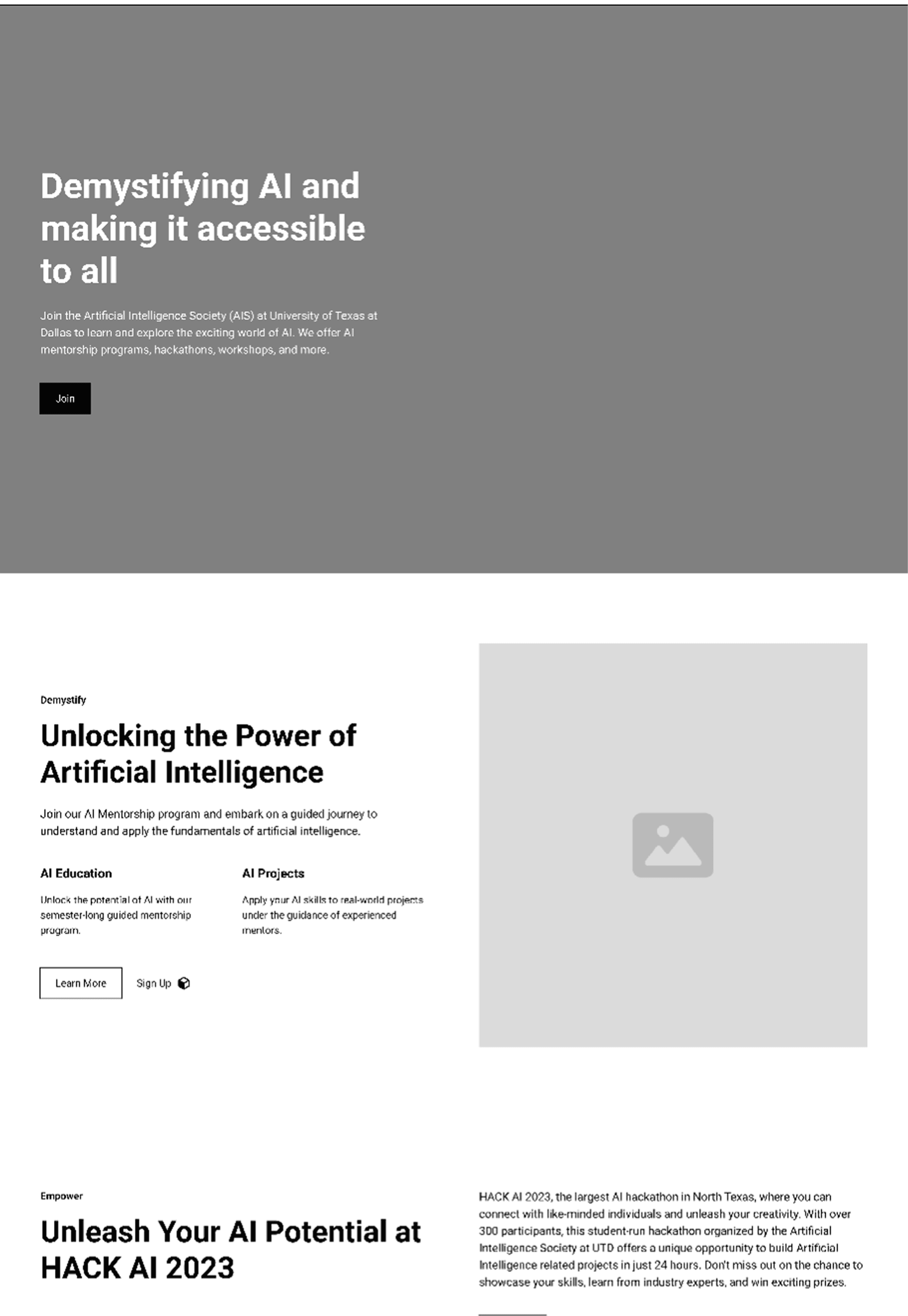
I used Relume AI to quickly explore layout directions, then refined the wireframes around AIS’s goals, technical constraints, and evolving brand guidelines.
Key Pages Explored
Event Page
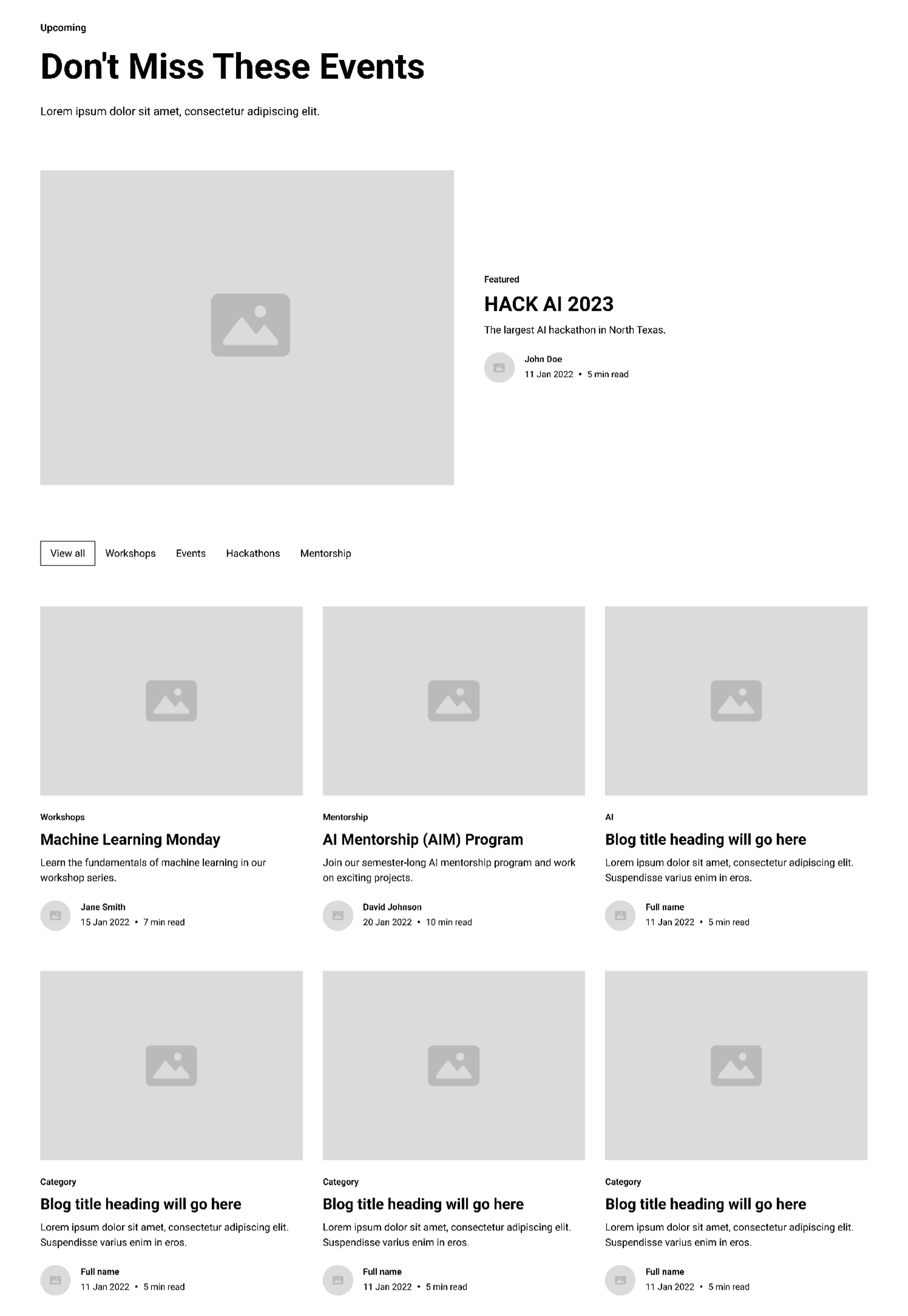
Prioritized a featured event card, filters, and upcoming/archive separation to make events easier to scan.
deliver
Final Designs
The redesigned website transforms AIS's digital presence from a cluttered information repository into an engaging, conversion-focused hub that reflects the organization's energy.
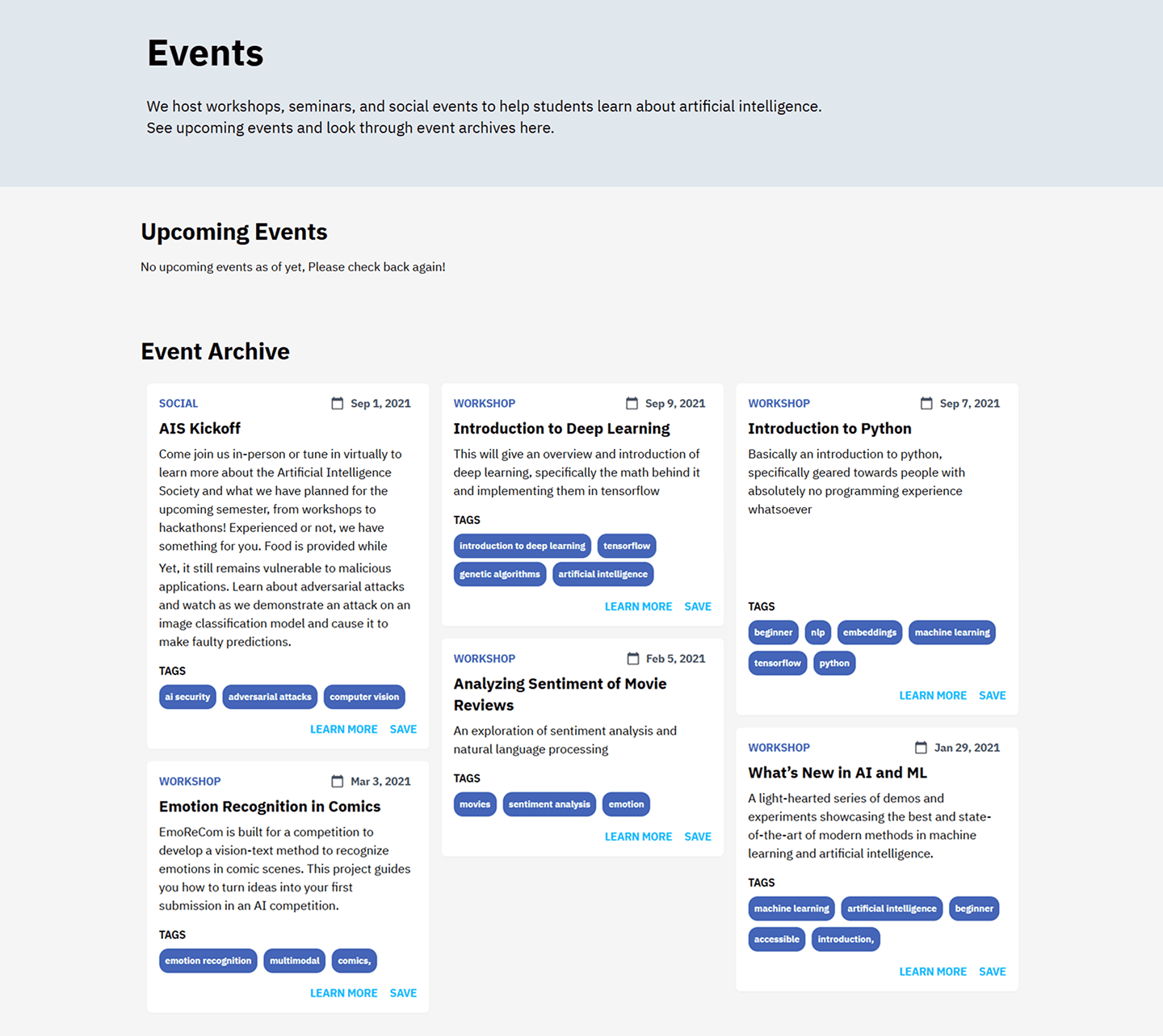
Event Discovery Transformation
Redesigned event architecture prioritizes featured content while maintaining comprehensive access to workshops, socials, and hackathons.
BEFORE
after
AFTER
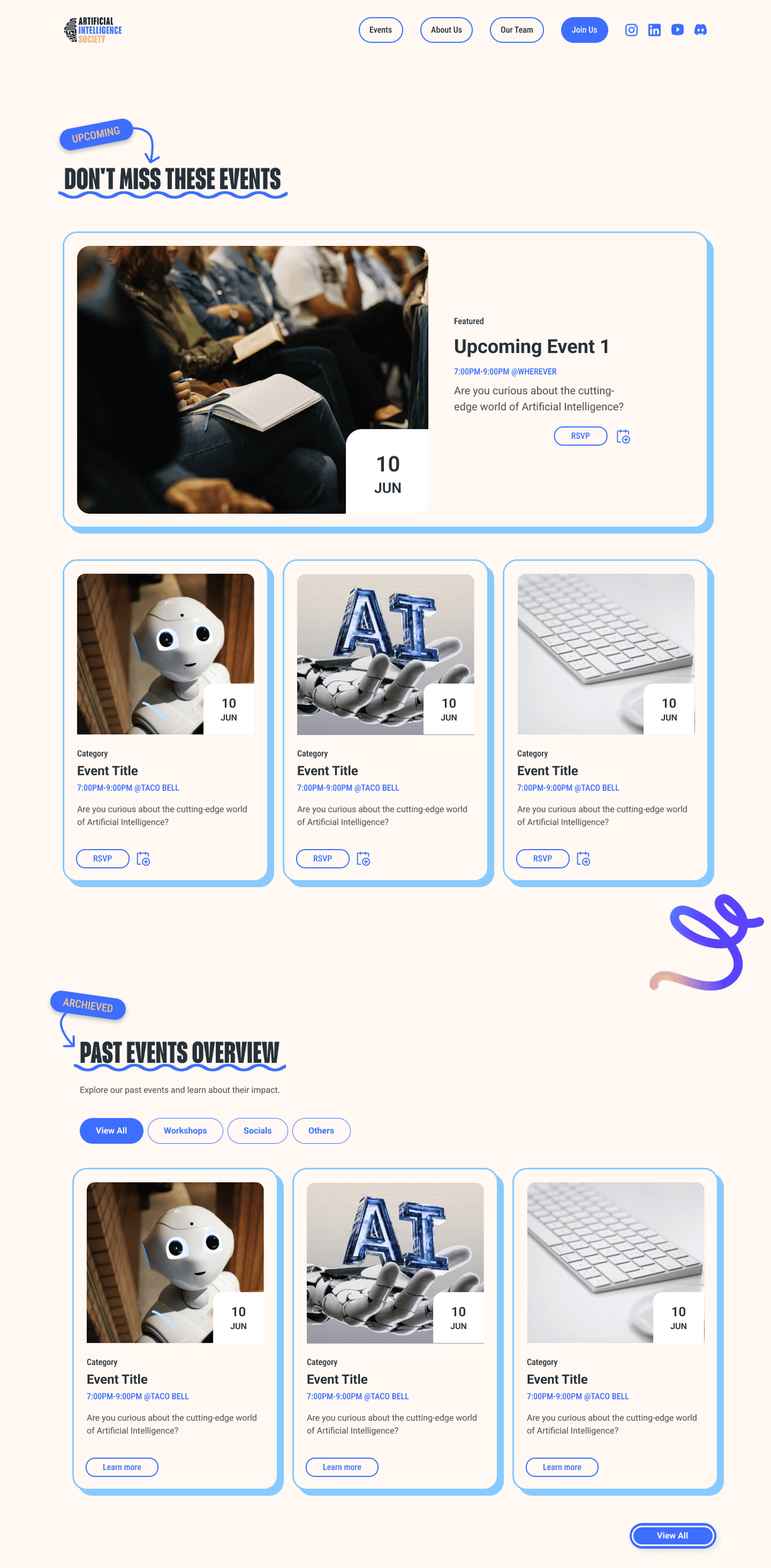
Key Improvements
✓
Featured event hierarchy — A large hero card highlights the most important upcoming event.
✓
Reduced cognitive load — Cleaner cards, simplified badges, and more whitespace improve scannability.
✓
Clear categorization — Upcoming/archive sections and filters help users find relevant events faster.
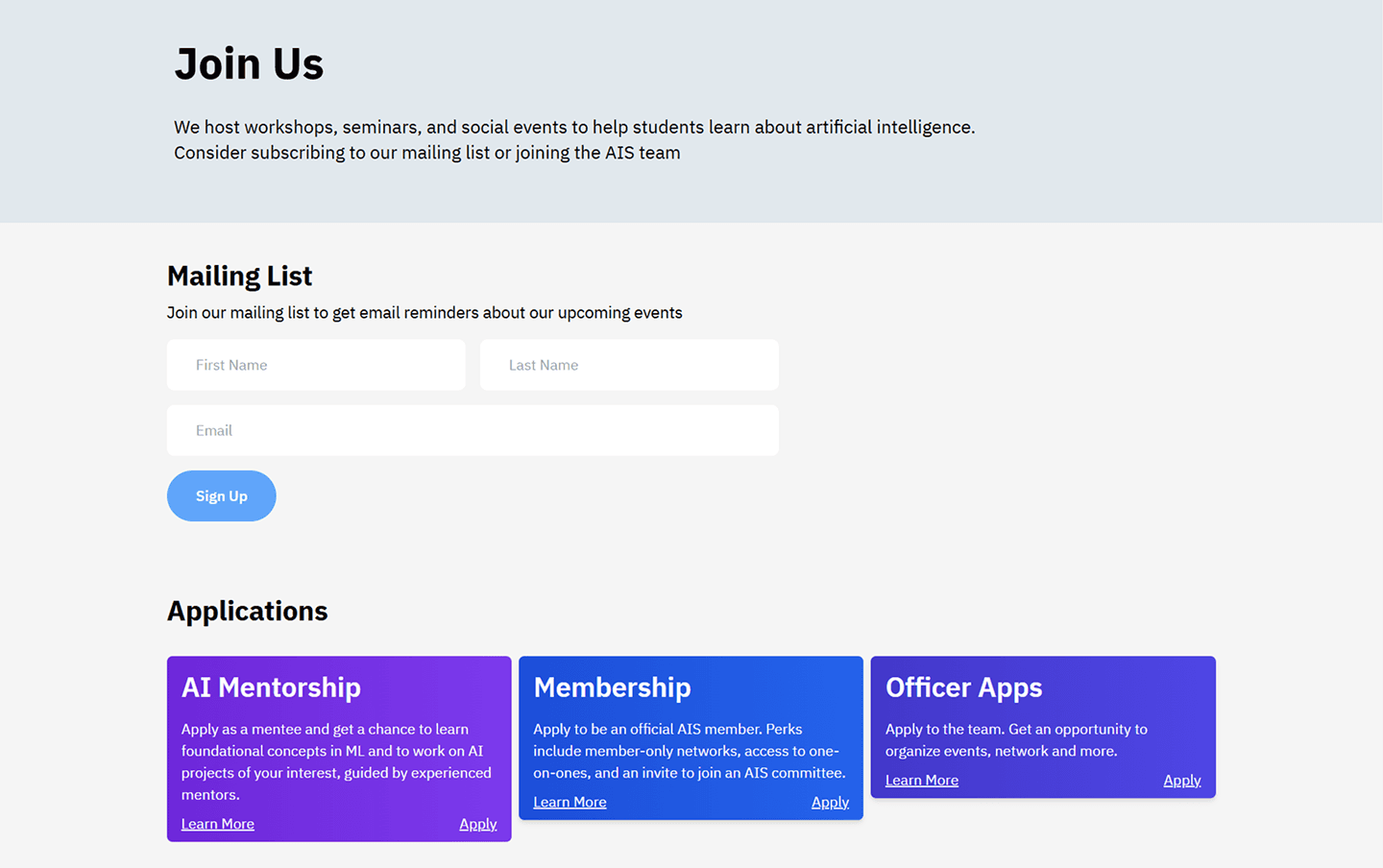
Join Path Optimization
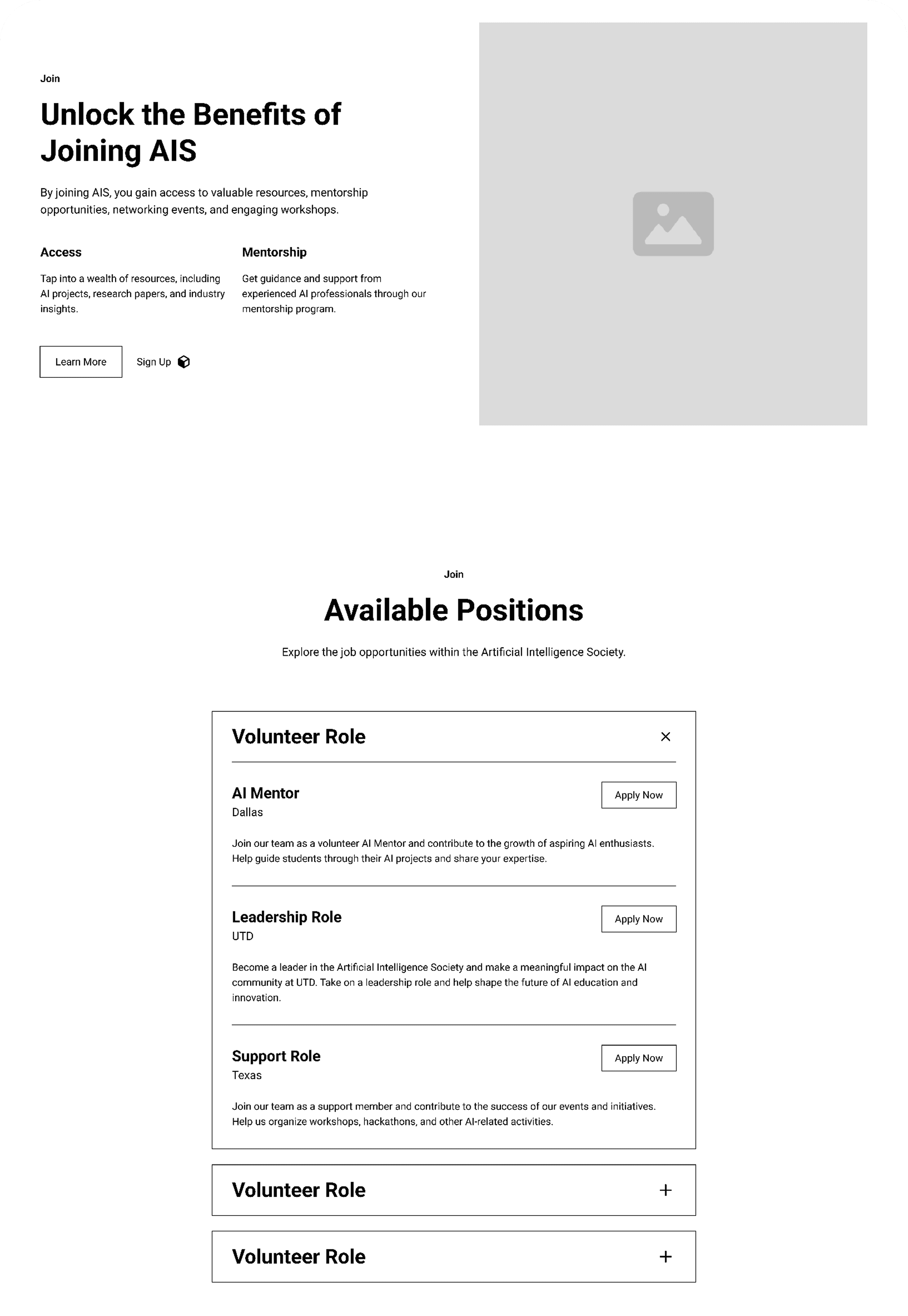
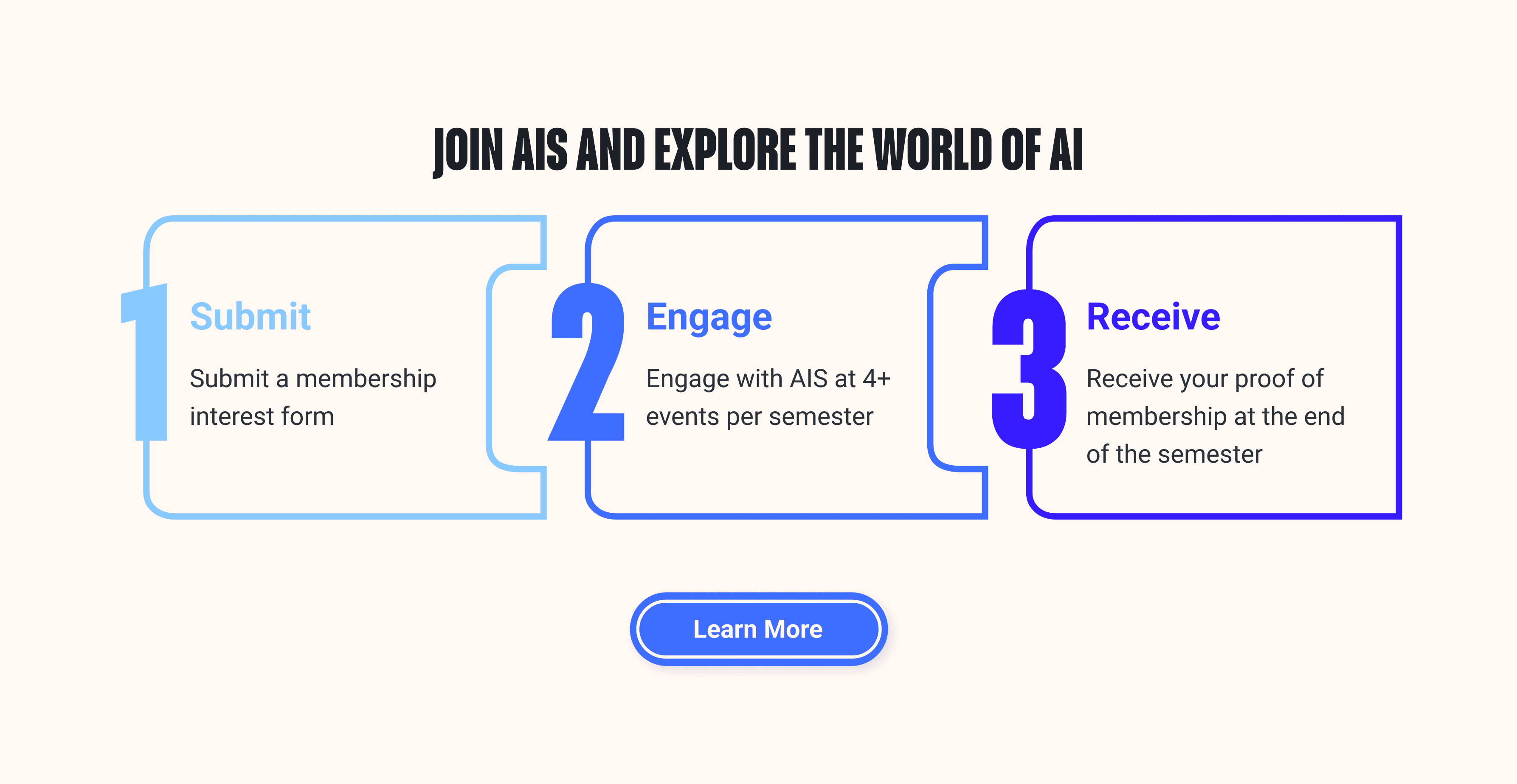
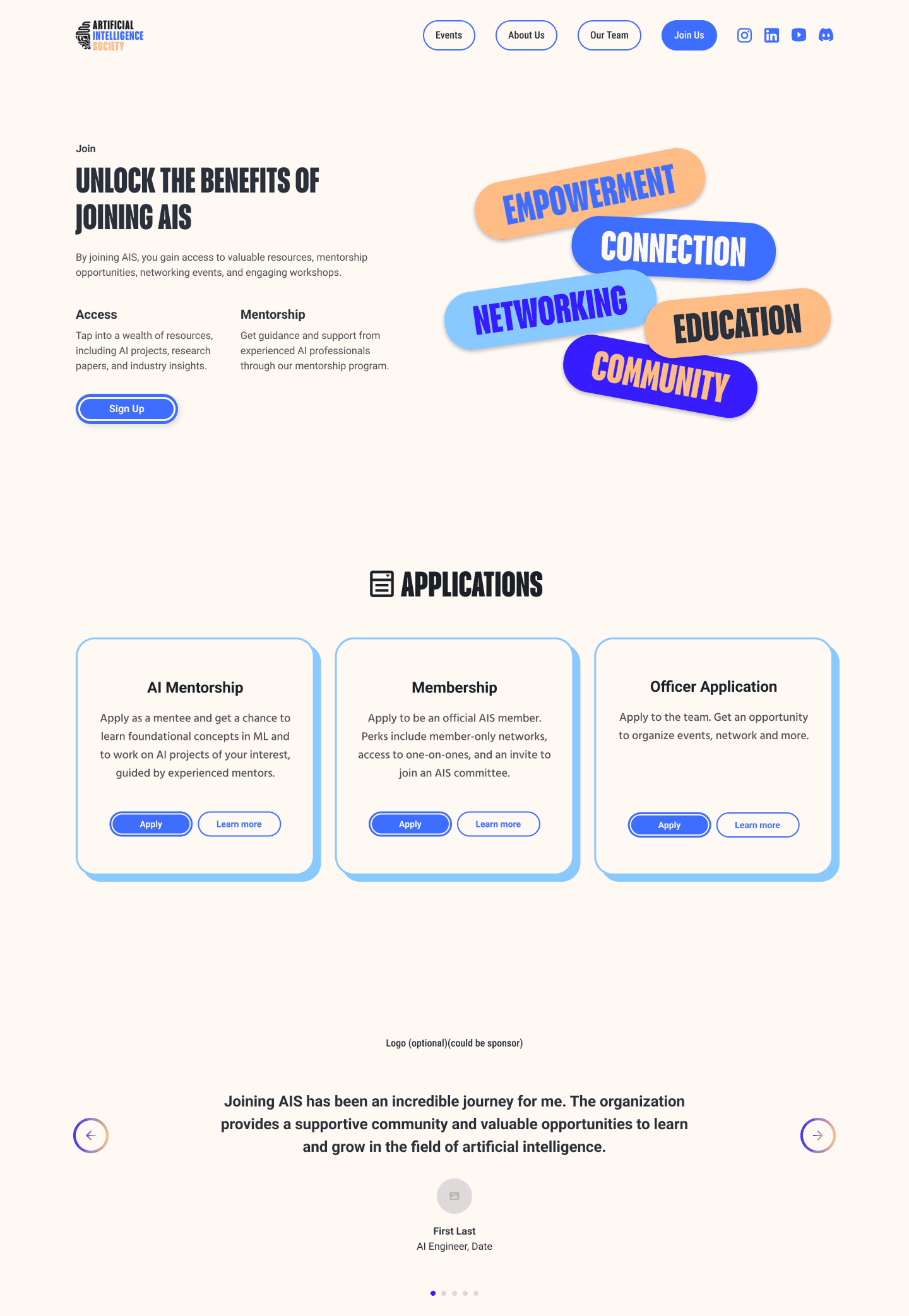
Strategic redesign leads with value proposition and social proof before presenting membership applications—converting interest into commitment.
BEFORE
after: home page
AFTER
Key Improvements
✓
Value proposition first — The page explains what students gain before asking them to apply.
✓
Social proof — Testimonials build trust through real member experiences.
✓
Clearer pathways — A three-step join process makes membership feel more approachable.
📈Results
The redesign improved AIS’s engagement and conversion metrics:
Click-Through Rate
<20% → 40%
Page Impressions
2x Increase
Event Turnout
↑ Higher
reflection
Reflections & Learnings
This project taught me how to connect UX decisions to organizational goals. Instead of treating the AIS redesign as a visual refresh, I focused on making the organization easier to understand, easier to join, and easier to trust. I learned to balance student needs, stakeholder goals, evolving brand guidelines, and technical constraints while leading the design direction. With more time, I would run usability tests with new students, A/B test CTA placement, and develop a stronger design system so future AIS teams can maintain consistency as the organization grows.